
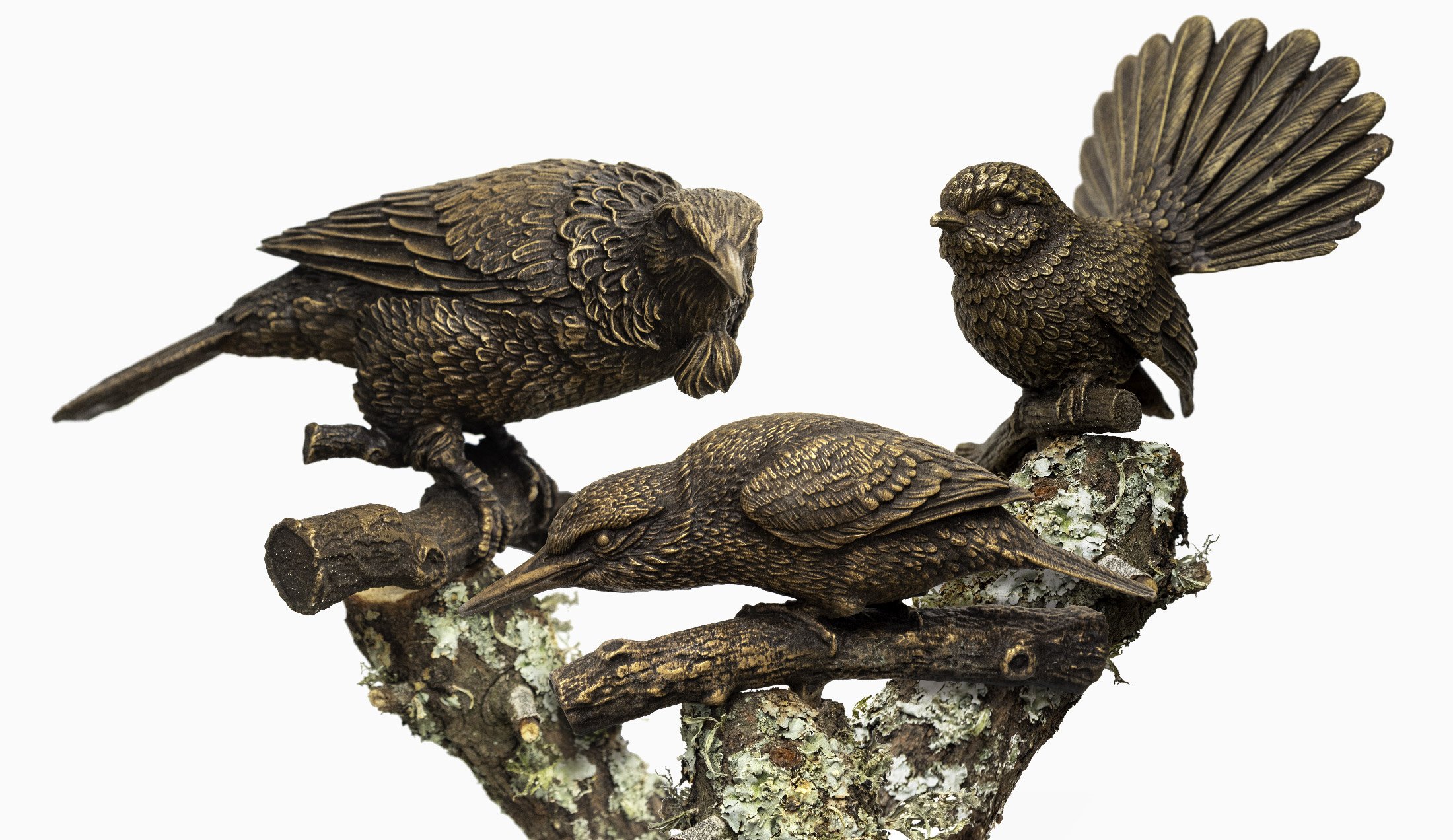
There is something special about encountering New Zealand's native birds in the garden. A fantail moving between branches, a tui dancing through the foliage or a kingfisher watching patiently for its next catch. These familiar moments have inspired our latest additions to the Bespoke Sculpture range, a trio of small bronze bird sculptures that bring a little of New Zealand's birdlife into outdoor spaces.
A creative collaboration inspired by New Zealand birdlife
The new bird sculptures have been designed by Austrian sculptor Abbas Saleh, with whom Bespoke Sculpture has an ongoing creative relationship. Abbas has previously designed other sculptures for us, including our totem poles, and has a particular appreciation for New Zealand's birds.
Although working from Austria, Abbas brings his own artistic perspective to these familiar subjects. His designs are developed digitally, sculpting each bird on a computer to establish its form, proportions and character before the model is brought into the physical world.
For these latest sculptures, we selected three birds that are personal favourites: the fantail, tui and kingfisher.
Forest Fantail
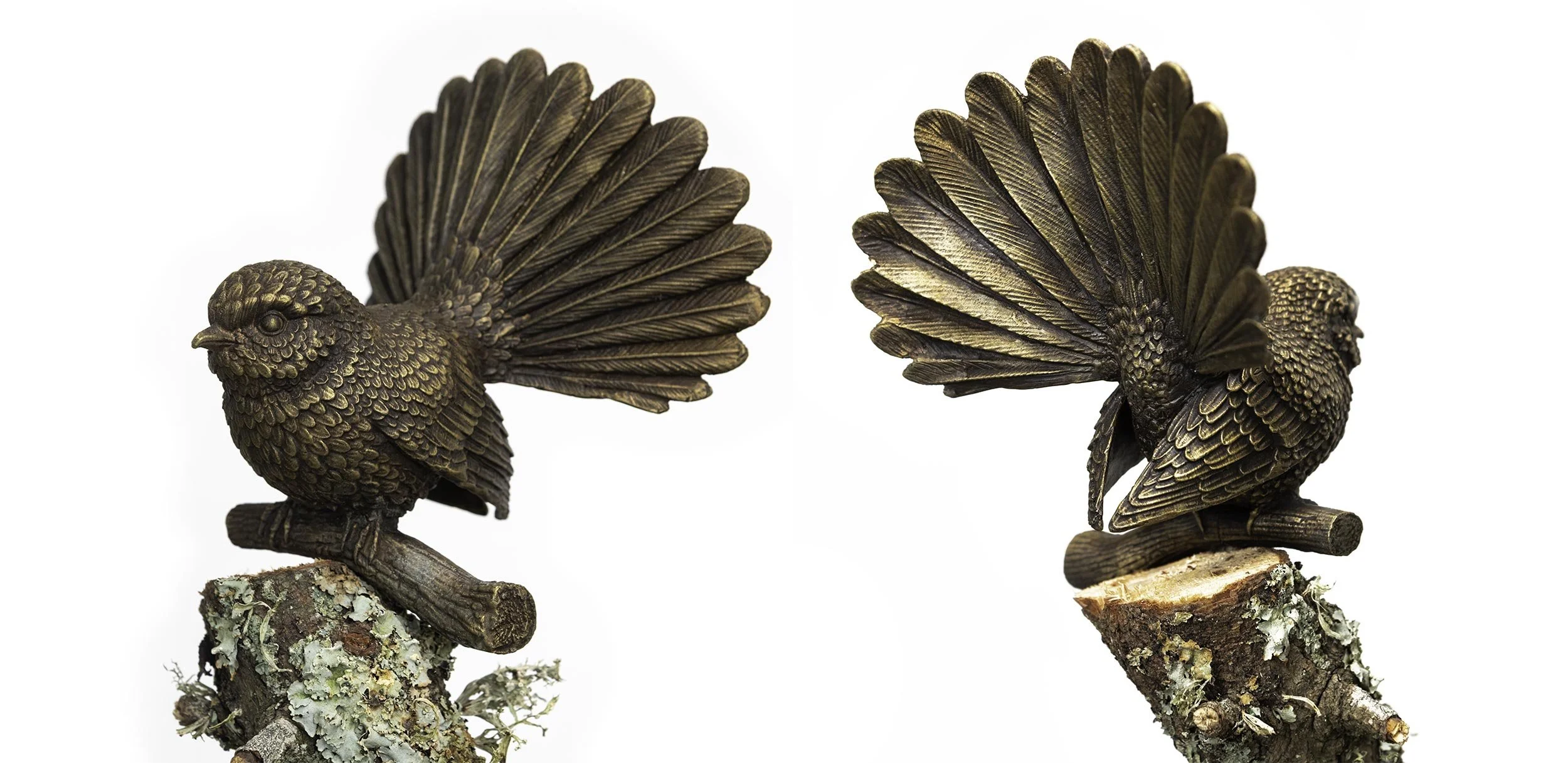
The fantail is one of New Zealand's most recognisable birds, with its distinctive tail often spread into a beautiful fan. Its delicate appearance and lively presence make it a familiar sight in gardens, bush margins and woodland settings.
Our Forest Fantail captures the bird with its tail fanned out behind it, creating a striking silhouette. The bronze brings out the layered feathers and gives the sculpture a warm, natural appearance that sits comfortably among garden planting.
Treetop Tui
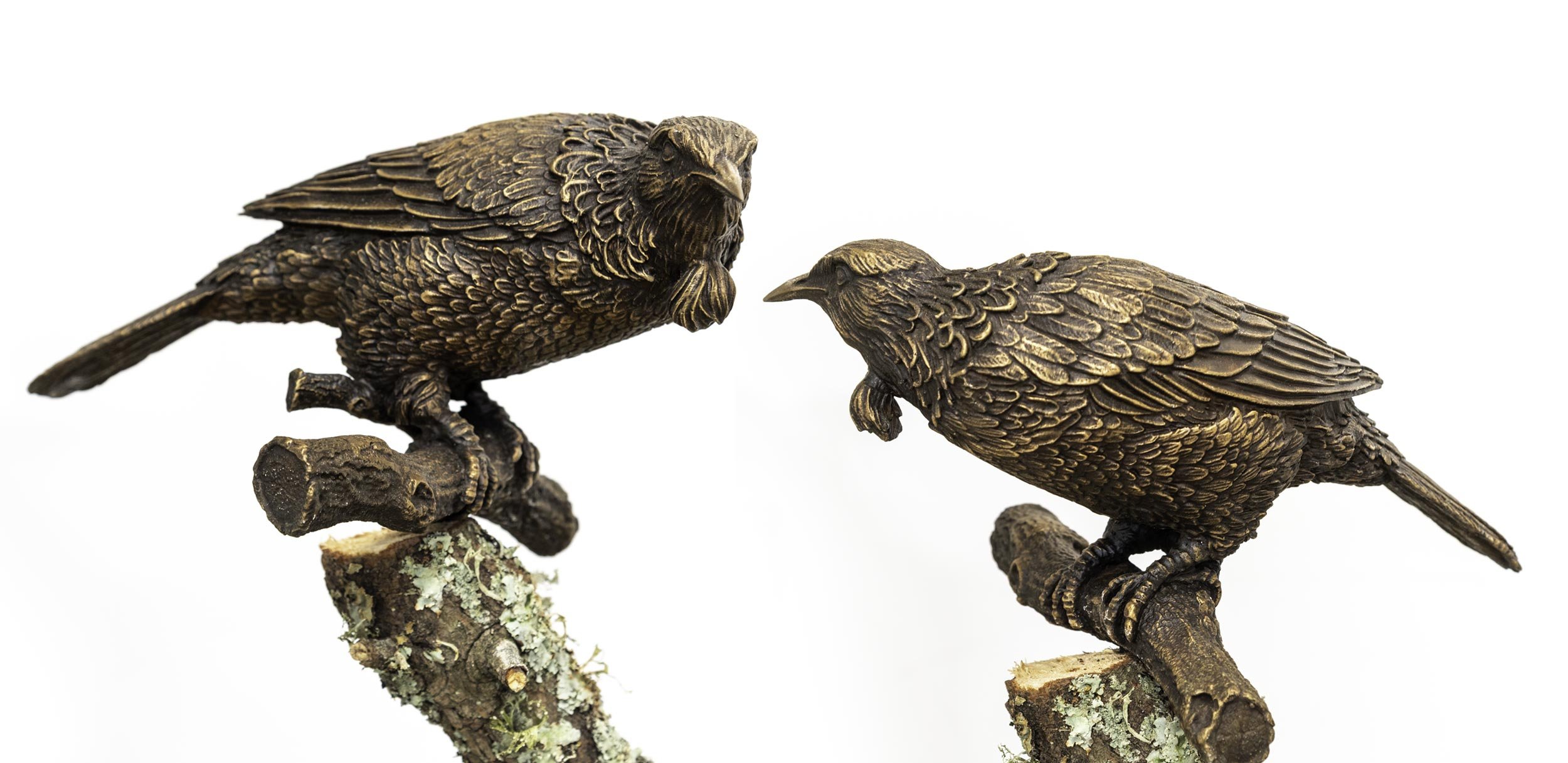
Tui are often seen in pairs, making this bronze sculpture a charming representation of a bird looking for its companion. Perched on a branch with its head lowered and body leaning forward, the Treetop Tui has a quietly inquisitive expression and a distinctive presence. Its beautifully layered feathers and warm bronze patina bring character to this familiar New Zealand native, with the suggestion that its companion is nearby.
Waterview Kingfisher
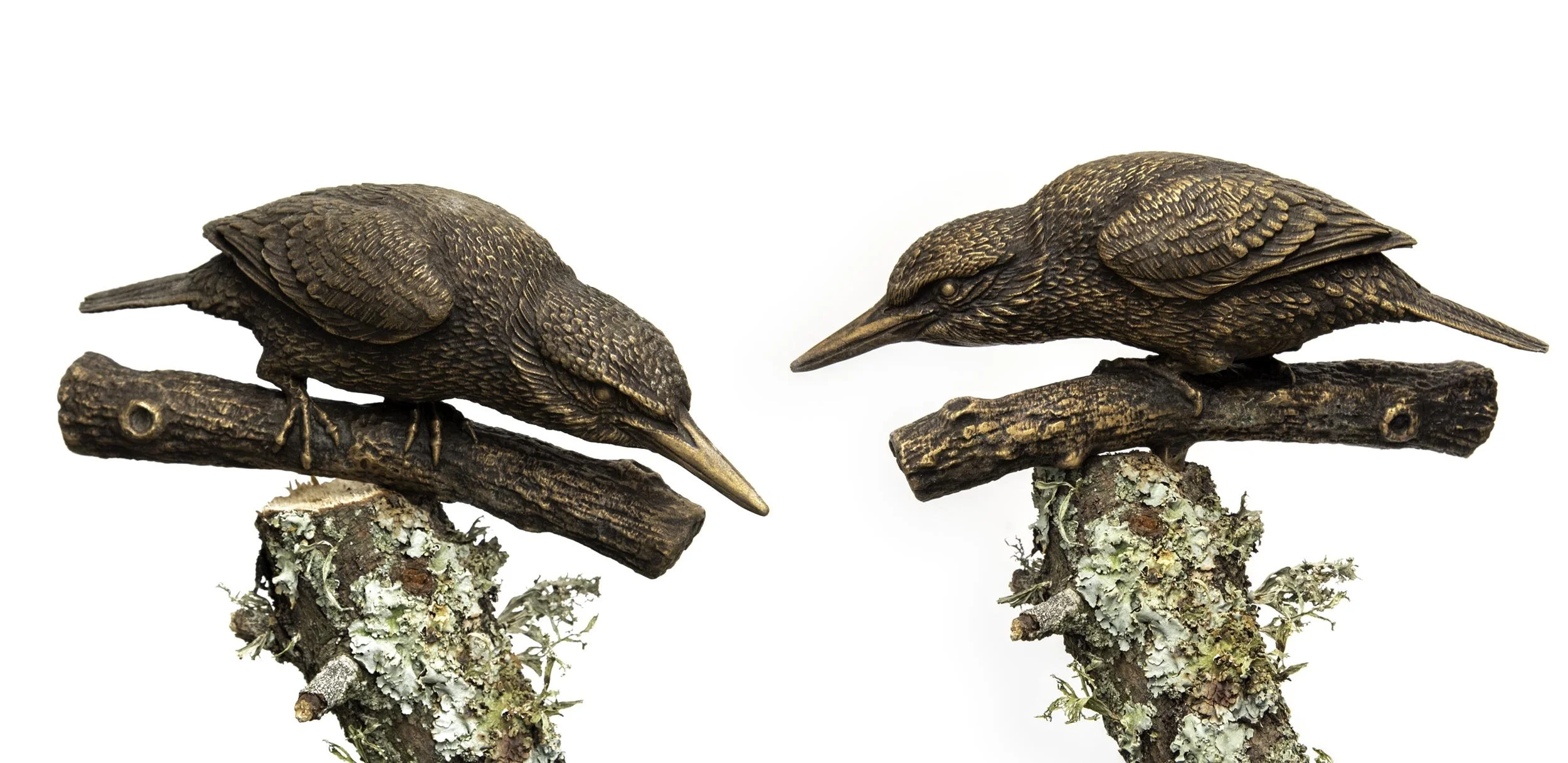
The kingfisher is a particularly interesting bird to observe, often perched patiently while watching the environment below. Its stillness can change in an instant as it spots an opportunity to catch its next meal.
The Waterview Kingfisher reflects this behaviour, with its head angled downwards as though keeping a close eye on something beneath it. The pose gives the sculpture a sense of purpose and quiet concentration, making it an engaging addition to a garden or outdoor setting.
From digital sculpture to physical model
One of the interesting aspects of these bird sculptures is the way they are created.
Rather than beginning with a clay model, Abbas develops each sculpture digitally. Using computer sculpting software, he builds the form of the bird in three dimensions, allowing its shape, proportions and features to be developed within a digital environment.
Once the design is complete, the digital file is supplied to our workshop, where a 3D printer produces a physical model.
This model becomes the starting point for the traditional Lost Wax Casting process. Although the original design exists digitally, the finished sculpture is ultimately created through a series of hands-on processes that require careful craftsmanship.
It is an interesting combination of contemporary technology and traditional bronze casting, allowing a sculpture created on a computer to become a permanent physical object.
The Lost Wax Casting process
Lost Wax Casting is a traditional method used to create bronze sculptures, including works with intricate shapes and fine surface detail. It involves creating a wax version of the sculpture, surrounding it with a ceramic shell and replacing the wax with molten bronze.
The process begins with the physical model produced from the digital design. A silicone mould is made around the model, capturing its surface features and form. Resin is then poured into the mould to create a replica, which can be refined before the next stage.
Once the resin model has been prepared, another silicone mould is created. This is used to produce a wax version of the sculpture.
The wax replica is carefully prepared before being surrounded by layers of ceramic material. Once the ceramic shell has hardened, it is heated so that the wax melts and drains away, leaving a cavity in the shape of the original sculpture.
Molten bronze is then poured into this cavity. After the bronze has cooled and solidified, the ceramic shell is removed to reveal the cast sculpture.
The newly cast bronze is cleaned and refined, with casting channels removed and the surface carefully worked. Finally, the sculpture receives its patina, giving the bronze its characteristic colour and finish.
Although the process has evolved over time, Lost Wax Casting remains an important method for producing bronze sculptures. It combines technical skill and craftsmanship with the ability to reproduce the form and character of an original design.
Small sculptures, meaningful additions
Measuring approximately 15–20 cm, the Forest Fantail, Treetop Tui and Waterview Kingfisher offer a different scale of sculpture to some of our larger works.
Their smaller size makes them suitable for a variety of outdoor settings, whether tucked into garden planting, positioned among branches or used as a subtle feature in a courtyard or outdoor living area.
Each bird comes mounted on a bronze branch with a pin underneath. This allows it to be secured to a post or inserted into a suitable branch, creating flexibility in how it is displayed.
The sculptures can be purchased individually, allowing someone to choose their favourite bird, or together as a grouping of three. Their size also makes them a thoughtful gift for someone who appreciates New Zealand's native wildlife, gardening or distinctive outdoor features.
Interested in bringing a little birdlife into your garden
Sculpture doesn't always need to be large to make an impression. Sometimes a smaller piece, thoughtfully positioned among plants or within an outdoor setting, can provide a point of interest and a connection to the surrounding environment.
The Forest Fantail, Treetop Tui and Waterview Kingfisher bring together contemporary digital design, traditional bronze craftsmanship and a shared appreciation for New Zealand's birdlife.
Contact Bespoke Sculpture to enquire about our existing sculptures, or to discuss commissioning a sculpture of your own.